Residence Permit Renewals via ANEF: A Major Breakthrough from the Council of State
Residence Permit Renewals via ANEF has become a long and obstacle-ridden process for foreign nationals in legal standing. What was once a relatively straightforward procedure has seen processing times skyrocket due to systemic issues within the ANEF platform, as I have recently discussed. This situation frequently leads to a lapse in legal residency status.
In a recent decision dated October 24, 2025, the Council of State (Conseil d’État) has, in my view, finally recognized the gravity of the situation. Acting as the highest administrative court, it confirmed that even the issuance of a Certificate of Extension of Processing (API) does not allow the State or administrative judges to disregard the presumption of urgency established by its own case law.
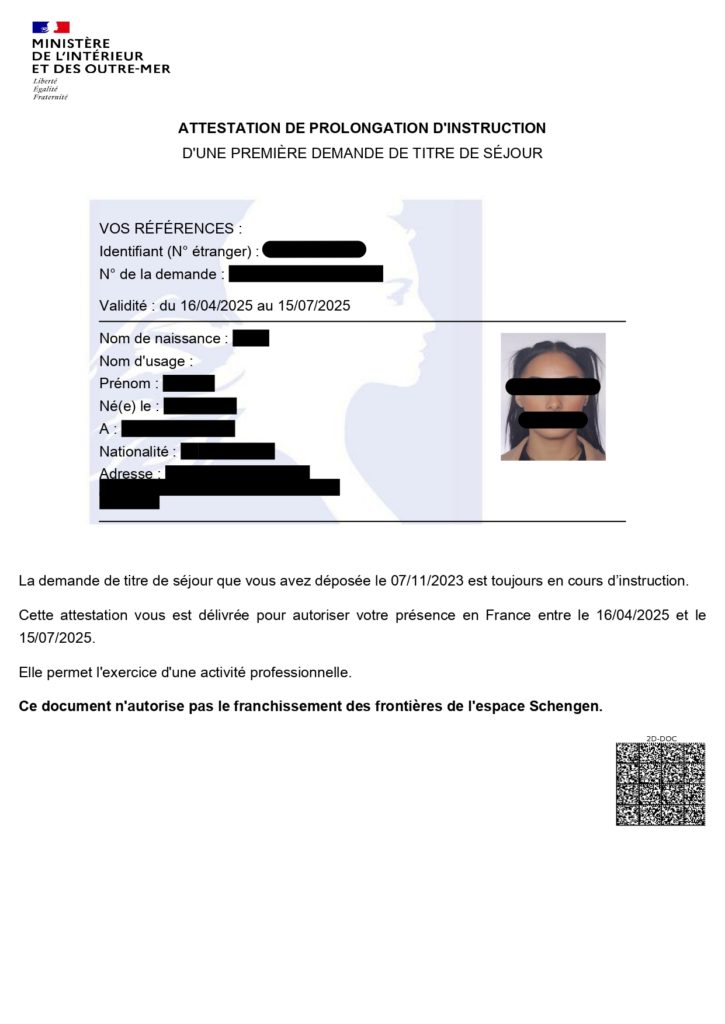 A New Tool Against Administrative Delays
This is excellent news and provides an additional tool in the fight against illegal administrative delays in residence permit renewals. Indeed, some summary judges (juges des référés)—particularly in Lyon—tend to rule that there is no longer an “emergency” if the foreign national possesses an API. Consequently, the judge declines to intervene, allowing the administration to take its time in delivering the actual residency card.
Fortunately, in such cases, a substantive appeal (recours au fond) is filed alongside the emergency proceedings. This means that even if the summary judge does not intervene, the decision not to renew will eventually be annulled by the Tribunal, though this process is time-consuming.
The goal is to save as much time as possible during the ANEF renewal process. This Council of State decision will “force” reluctant emergency judges to act; they can no longer claim a lack of urgency simply because the Prefecture has issued an API.
It has become a very common practice for Prefectures to issue an API “by magic” as soon as legal proceedings are initiated against a refusal to renew. After months of leaving the individual without any documentation, the Prefecture suddenly provides an API and argues that the emergency has vanished since the applicant now has a temporary residency document. Some judges have been following this interpretation blindly.
This “call to order” from the Council of State is welcome. Judges can no longer hide behind the API to thwart the presumption of urgency. They will now be required to take more concrete measures against the administration, such as injunctions to re-examine the file within a strict timeframe, accompanied by daily penalty payments (astreintes) for every day of delay.
While it is still early to see if lower court judges will fully align with this Council of State ruling, we will certainly highlight it in our emergency petitions to compel them to intervene and end the interminable waiting periods associated with ANEF.
The four-month deadline to initiate an appeal is essential and must always be kept in mind, regardless of the type of permit requested: temporary residence permits, multi-year permits, or resident cards.
Above all, never hesitate to take legal action. The risks are non-existent, and you stand only to gain, even if the process sometimes takes longer than expected. Conversely, waiting leads to repeated lapses in rights, problems with employers and social security agencies, and the inability to travel—not to mention the administrative instability and stress this causes.
Too often, foreign nationals hesitate to take their case to court even when they are in the right. This culture of hesitation must end. The more the administration is sanctioned for its failures, the better it will perform in the future.
To learn more about the author, discover the biography of Alexandre Gillioen, immigration lawyer in Lyon
Previous post: 2026 immigration law: What Can We Expect This Year? - Next post: Civic Exam for French Nationality: The Decree Has Been Published!